Tracking White-Tailed Deer Signs in Woodland Areas
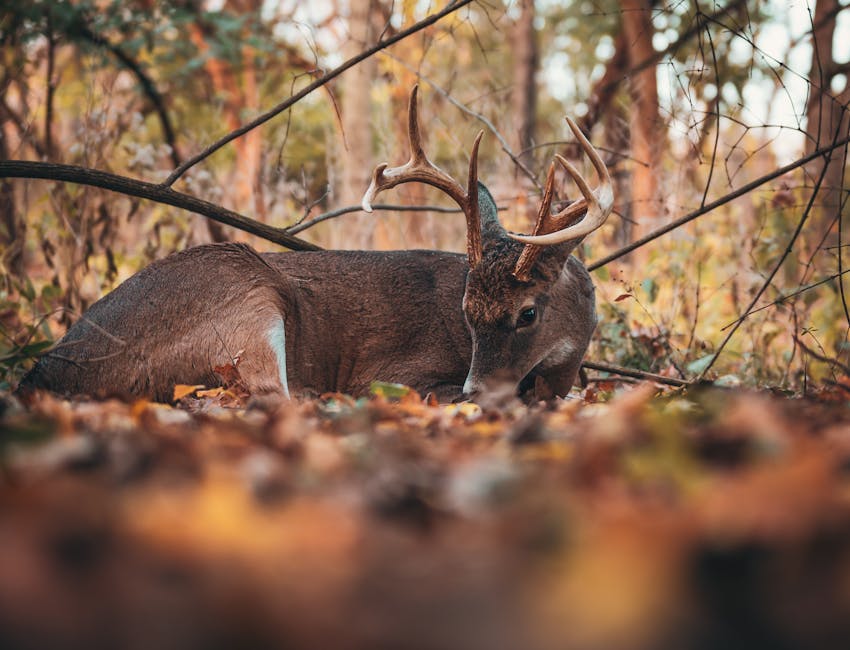
Understanding the movements and habits of white-tailed deer is a skill that develops with observation and patience. In woodland areas, deer leave behind a variety of signs that can provide insight into their daily routines, feeding preferences, and travel corridors. By learning to recognize and interpret these signs, anyone spending time in the woods can gain a clearer picture of how deer use the landscape. The process involves looking closely at the ground, trees, and understory for subtle clues that reveal past activity.
Deer are creatures of habit, and their sign tends to cluster around food sources, water, and safe cover. Tracks, droppings, rubbed bark, and bedding spots are among the most common indicators. Each type of sign offers different information about the deer’s size, sex, and behavior. For example, hoof prints can show the direction of travel and approximate age, while droppings can indicate diet and recent activity. Rubbed bark on young trees often marks the presence of bucks during the fall rut, and bedding spots reveal where deer rest during the day or night. Recognizing these signs requires careful attention to detail and a willingness to move slowly through the woods.
This article explores the main categories of deer sign and discusses how to interpret them in a woodland setting. The focus is on the methodology of observation rather than predicting specific outcomes. Factors such as weather, time of year, and local habitat conditions always influence what signs are present and what they might mean. With practice, tracking becomes a way to read the story of the land through the evidence left behind.
Hoof Prints and Track Identification
Hoof prints are often the first sign that people notice when looking for deer activity. White-tailed deer tracks have a distinctive shape that resembles a heart or cloven hoof. Each print consists of two symmetrical halves with a narrow gap in the middle. The front hoof is slightly larger and more rounded than the hind hoof, but in soft substrate such as mud or snow, the difference can be subtle. The size of the track provides a general indication of the deer’s age and size. A mature buck may leave a track that is three inches or more in length, while a fawn’s track may be less than two inches.
When tracking in woodland areas, it is helpful to examine the depth and clarity of the print. Fresh tracks in damp soil hold crisp edges, while older tracks become blurred by wind, rain, or falling leaves. The distance between successive prints, known as the stride, can suggest the deer’s gait. A walking deer tends to place its hind foot close to or into the print of the front foot, creating a pair of tracks in a line. A running or bounding deer leaves wider spacing and more irregular patterns. By following a set of tracks over a short distance, it is possible to infer the direction of travel and whether the deer was moving with purpose or stopping to feed.
It is important to consider that tracks alone do not reveal the deer’s sex or age with certainty. However, in combination with other signs such as the presence of antler rubs or the size of droppings, they can contribute to a more complete understanding. Track identification is best practiced in varied conditions. Different substrates—leaf litter, mud, sand, or snow—will alter the appearance of the same hoof. Taking time to compare tracks in multiple environments builds familiarity and reduces misinterpretation.
Droppings as Indicators of Diet and Activity
Deer droppings, often referred to as scat, vary in shape, size, and consistency depending on the deer’s diet and the time of year. In woodland areas, white-tailed deer primarily browse on woody plants, twigs, leaves, and acorns. When feeding on such fibrous material, their droppings tend to be firm, oblong pellets that are typically clustered in piles. During spring and summer when fresh green vegetation is abundant, the scat may be softer and more irregularly shaped, sometimes forming a mushy pile rather than individual pellets. Recognizing these variations can offer clues about seasonal food sources.
The freshness of droppings is a useful indicator of recent deer activity. Fresh scat has a moist, glossy surface and a mild odor, while older droppings become dry, dull, and crumbly. If a pile is found in an area with sparse leaf litter, it may indicate that deer are using that spot regularly. The number of piles in a given area can suggest the frequency of use. In a core bedding area or a well‑traveled trail, multiple piles may be scattered within a small radius. Conversely, isolated piles along a ridgeline or near a food source may indicate a single visit.
It is also possible to infer the deer’s health and digestion from droppings, but such observations should be treated as contextual rather than diagnostic. For instance, very watery or stringy scat might be linked to a diet high in moisture‑rich plants, but it could also reflect stress or illness. Without veterinary knowledge, it is best to avoid drawing conclusions beyond noting the type of vegetation available. Keeping a record of the location, date, and condition of droppings over time can help track shifts in deer movement patterns across the seasons.
Rubbed Bark and Antler Rubs
During the autumn months, male white-tailed deer rub their antlers against young trees and shrubs. This behavior serves multiple purposes: it helps remove the velvet from newly hardened antlers, marks territory with scent from glands on the forehead, and strengthens neck muscles for the upcoming breeding season. The resulting rubs are visible as patches of stripped bark on saplings, often at a height that corresponds to the deer’s shoulder or antler spread. Typically, the rub occurs on a tree that is between two and four inches in diameter, though smaller or larger trees may be used.
In woodland environments, rubs are most commonly found along edges of clearings, near trails, or in transition zones between forests and fields. The appearance of a fresh rub changes over time. Initially, the exposed wood is lighter in color and may have shreds of bark still attached. As weeks pass, the wood darkens and the edges become smoother. The presence of multiple rubs in a concentrated area can indicate that a buck is actively patrolling a core territory. However, not every rub necessarily belongs to a different deer. The same individual may rub several trees in a single area over the course of a few nights.
Examining the height and width of a rub can provide clues about the buck’s size. A rub that is high on the trunk and wide in diameter suggests a larger deer with a wide antler spread. Lower, narrower rubs are more likely from younger bucks or does using their antlers (though does rarely rub). It is also common to find rubs on trees that have a strong odor or a rough texture, such as pines and cedars. The resinous bark holds scent longer, making these species attractive for marking. When interpreting rubs, it is helpful to consider the surrounding habitat: a rub in a thicket may signal a bedding area, while a rub along a fence line may indicate a travel route.
Bedding Spots and Resting Areas
White‑tailed deer spend a significant portion of each day resting, and the places they choose for bedding offer valuable information about their security and comfort preferences. In woodland areas, bedding spots are typically situated in locations that provide cover and a clear view of approaching threats. Deer often bed at the base of a mature tree, on a ridge with a downwind slope, or in dense undergrowth such as briar patches or thickets. The bed itself is an oval depression in the leaf litter or soil, slightly larger than the deer’s body, with the adjacent vegetation sometimes flattened or broken.
The orientation of a bedding site can indicate the direction the deer was facing while resting. Deer usually lie with their backs to the wind, allowing them to scent danger from downwind and see movement ahead. If the ground is dry, the bed may be shallow; in damp or snowy conditions, the depression is more pronounced. Fresh bedding spots have a distinct odor from the deer’s body and may contain scattered hairs. Observing the condition of the vegetation around the bed helps estimate how long ago the deer was present. Green plants that are still bent but not wilted suggest recent use, while dried or recovered stems indicate older activity.
Multiple bedding sites within a small area can suggest a core bedding area that is used repeatedly over time. In such cases, there may be a network of trails leading to and from the beds, as well as nearby rubs or scrapes. It is important to note that deer may shift their bedding locations based on hunting pressure, weather, or food availability. A bedding area that is active in early fall might be abandoned later in the season. By mapping bedding spots and revisiting them periodically, it becomes possible to observe how deer adapt their resting habits to changing conditions.
Interpreting Sign Patterns and Movement Corridors
No single sign tells the whole story. The most informative approach to tracking white‑tailed deer involves connecting multiple types of sign to reconstruct movement patterns. For example, a trail of tracks leading to a bedding area, with nearby droppings and a rub on a tree, suggests that a buck is using that route regularly. When similar patterns appear in multiple locations across a woodland, they can indicate travel corridors that link feeding areas, water sources, and resting sites. These corridors are often found along ridges, creek bottoms, or the edges of forest openings.
Timing also plays a role in interpretation. Sign that appears fresh in the morning may indicate nocturnal activity, while sign discovered in the afternoon could be from the previous night. Weather events such as rain or snowfall reset the clock by erasing older sign, making it easier to assess recent activity. Keeping a field journal with sketches, dates, and notes about habitat conditions helps build a long‑term understanding of deer behavior in a specific woodland area. Over time, patterns emerge that are more reliable than any single observation.
Finally, it is worth remembering that deer are adaptable animals and their sign can vary widely from one region to another. Local factors such as soil type, dominant tree species, and human disturbance all influence where and how deer leave their marks. Those who spend time learning these patterns often develop a deeper appreciation for the complexities of deer ecology. Whether for wildlife observation, photography, or simply enjoying a walk in the woods, recognizing deer sign adds a layer of insight to time spent outdoors.